DSCR Loan in an LLC: What the Personal Guarantee Still Costs You
Most investors assume that holding a DSCR loan in an LLC removes personal liability on the debt. It usually does not. Here is what actually changes when the LLC is the borrower, and what the personal guarantee still costs you when the property stops cash flowing.

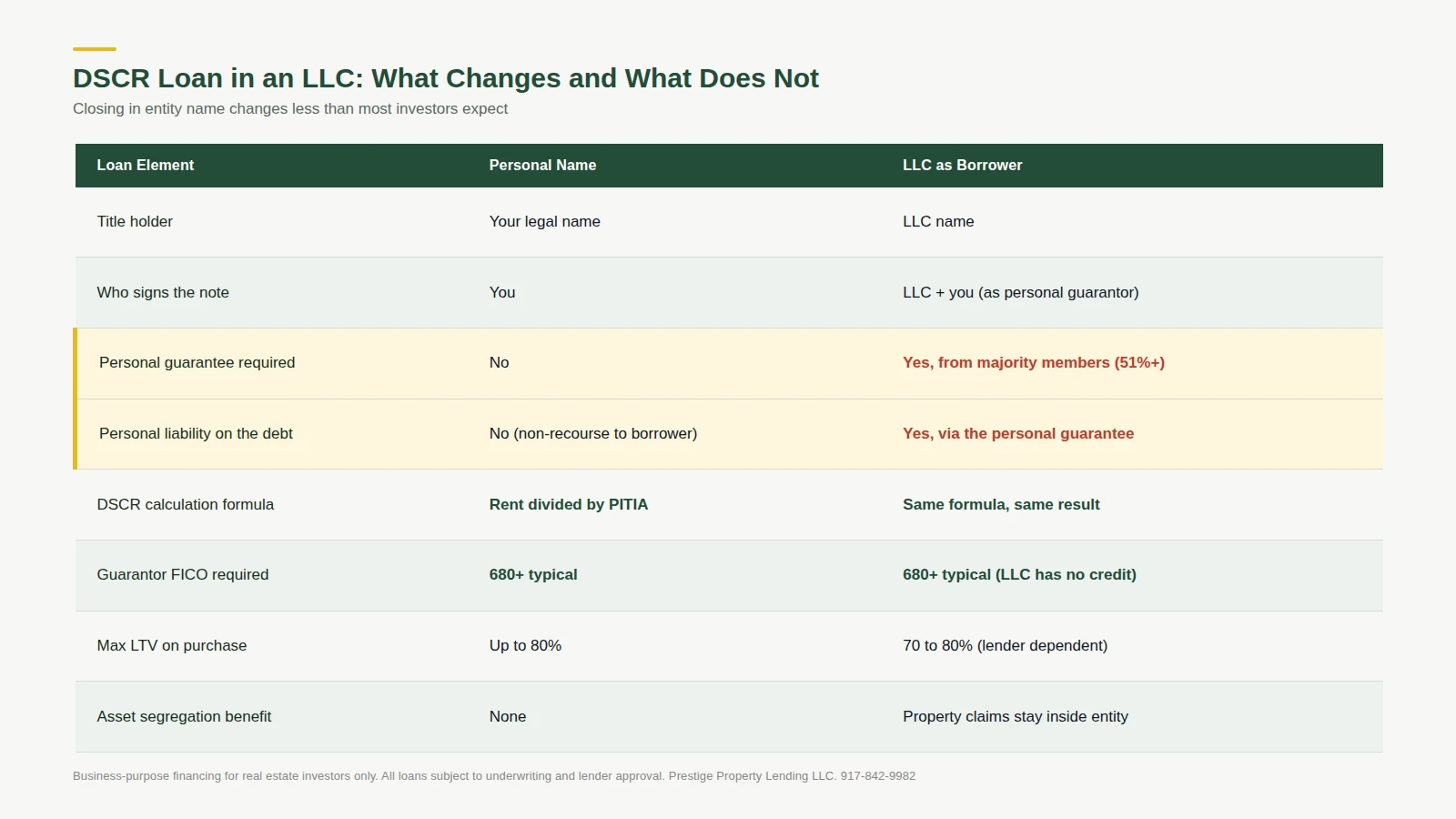
A DSCR loan can close in an LLC name. Most experienced investors prefer this, and lenders that handle business-purpose financing fund these regularly. What does not go away is the personal guarantee: almost every DSCR lender requires a personal guarantee from the majority members of the entity. The LLC separates your rental property from your other assets. It does not separate you from the loan obligation. This post is for real estate investors holding non-owner-occupied rental property, not for anyone buying a home they will live in.
How the LLC borrower arrangement actually works
When an LLC is the borrower of record, the entity appears on both the deed and the promissory note. You, as the majority member, sign the personal guarantee alongside the entity. Two signatures close the loan: one from the LLC’s authorized signatory (usually you, acting on behalf of the entity) and one from you as the individual guarantor.
The guarantee is typically unconditional and personal. It means if the LLC defaults, the lender can pursue the guarantors directly, not just the property. The extent of recourse depends on the specific guarantee language, which varies by lender. Some are full recourse on the entire debt. Some are limited to specific carve-outs such as fraud, waste, or environmental liability. Read the actual guarantee document before assuming what it covers.
The DSCR calculation does not change
Lenders run the same qualification formula whether the borrower is an individual or an LLC. The property’s gross monthly rent divided by PITIA (principal, interest, taxes, insurance, and any HOA dues). A $2,600 monthly rent against a $2,150 PITIA is a 1.21 DSCR regardless of who holds title. That property qualifies the same way in either name, and it prices at the same rate tier.
Your personal credit score still matters. The LLC has no independent credit history. Lenders pull the guarantor’s credit, and most DSCR programs require a 680 FICO minimum from all guarantors. Better pricing typically starts around 700 to 720. The entity structure does not substitute for the guarantor’s credit profile.
Use the DSCR calculator to run the numbers on a specific property before spending time on entity paperwork. A property that cannot clear 1.0 DSCR is not helped by what name appears on the deed.
Want terms on a specific deal?Answer seven questions and get a decision in 72 hours.
Get FundingWhat actually changes when the LLC holds title
Asset segregation is the real function of the LLC structure. If a tenant sustains an injury on the property and wins a civil judgment, that judgment attaches to the LLC, not to you personally. Your other investment properties, your personal bank accounts, and your other assets are a layer removed from that claim, as long as the LLC has been properly maintained.
Proper maintenance means operating the LLC as a genuinely separate entity: its own bank account, no personal expenses running through it, a signed operating agreement filed with the state, annual reports current, and no commingling of funds. When these break down, courts pierce the corporate veil and treat the LLC as if it were the individual. At that point, the asset protection disappears and the creditor can reach personal assets anyway.
A properly run LLC adds a meaningful layer of protection against property-level liability claims. An LLC operated carelessly provides almost none. The decision to use one should come with the commitment to run it correctly.
Where rate and LTV sometimes shift
Some lenders price LLC loans identically to personal-name loans. Others apply a small rate adjustment, typically 0.125 to 0.25 percentage points in the current market (observed range only, not a guarantee of what any specific lender will offer you), or reduce the maximum LTV slightly on a cash-out refinance. On a purchase, 75 to 80 percent LTV is common for both structures. On a cash-out refinance, some lenders cap LLC borrowers at 70 to 75 percent LTV rather than the 75 to 80 percent they would allow an individual borrower. These differences are lender-specific and are not a universal rule.
A few lenders require the LLC to have been formed a minimum of 30 days before closing. If you are acquiring a property and plan to title it in a new entity, form the entity before you go under contract, not after. A last-minute LLC formation adds a timeline risk you do not need.
The entity paperwork that delays closings
Three documents are required for every LLC borrower: the Articles of Organization (filed with and confirmed by the state), the Operating Agreement (naming members and their ownership percentages), and the EIN confirmation letter from the IRS. Missing any one of these when underwriting is ready to order title will move your closing date.
The Operating Agreement receives the most scrutiny. It needs to identify who has authority to bind the entity and in what capacity. A single-member LLC where the sole member is also the guarantor is straightforward. A two-member LLC where ownership is split 50/50 usually requires both members to guarantee, because neither individually controls the entity. A multi-member LLC with a clear majority holder (one member at 51 percent or more) typically requires only that member’s guarantee, but some lenders require guarantees from all members at 20 percent or above. Confirm the threshold with the lender before you structure the operating agreement.
Series LLCs and why most DSCR lenders avoid them
A series LLC allows a single master entity to create legally separate cells, each holding a different property. The concept is appealing for portfolio investors who do not want to form a new entity for every acquisition. The problem is that DSCR lenders frequently decline series LLC borrowers, because the legal enforceability of series liability separation has not been uniformly tested across states, and many states do not recognize the structure at all. If you are building a rental portfolio and plan to use DSCR financing, standard single-purpose LLCs are the path of least resistance with most lenders.
When the LLC structure does not protect you from the loan
If the property stops covering its payment, the lender collects from the LLC first. If the LLC cannot pay, they call on the guarantee. That call comes to you. Having the entity on title does not change your exposure to a loan default. It only changes your exposure to liability claims that originate at the property level and outside the loan itself.
Extension fees and default rates apply the same way to LLC loans as they do to personal-name loans. If a bridge loan inside an LLC runs past its maturity date, the lender applies the default rate to the LLC balance, and the personal guarantee means those costs come back to you if the entity cannot cover them. That same dynamic applies to any DSCR loan that gets into trouble during a vacancy period or a major repair. The earlier post on how a bridge loan works when the exit slips covers the timeline and cost math on that specific scenario.
When this loan is wrong for you
A DSCR loan in an LLC is a business-purpose product for non-owner-occupied investment property. It cannot fund a primary residence. It is not a tool for eliminating personal liability on the debt itself: the guarantee means you owe the loan regardless of the entity name on the note. If your credit is below 680, the LLC status does not solve the underwriting problem. If the property’s DSCR is below 1.0, no entity structure makes it approvable.
The broader entity decision across all loan types, not just DSCR, is covered in the earlier post on borrowing in an LLC: what business-purpose lenders actually require. That post covers why lenders prefer entity borrowers, what consumer mortgage servicers do differently, and the documentation requirements across programs.
For this specific loan type, the DSCR rental loan program page covers current LTV limits, minimum loan size, term options, and the 72-hour approval process. All loans are subject to underwriting and lender approval. Call 917-842-9982 for questions on entity structuring or deal specifics.
Common questions
Can I close a DSCR loan in an LLC I just formed?
Most lenders accept newly formed LLCs, but some require the entity to have been active for at least 30 days before closing. The practical move is to form the entity and obtain the EIN before you go under contract on a property. Waiting until after you have a signed purchase agreement adds timing risk to the close that you do not need. A state-registered LLC and a confirmed EIN take a week or less in most states.
Do I still need a personal credit check if the LLC is the borrower?
Yes. The LLC has no independent credit history of its own, so the lender pulls credit on the personal guarantor. The typical DSCR minimum is 680 FICO, with better rate tiers starting around 700 to 720. The guarantee is the reason personal credit still matters: you are personally backstopping the LLC obligation on the note.
Does a 50/50 LLC mean both members must guarantee?
Usually yes. Most lenders require personal guarantees from all members who individually hold 20 percent or more of the entity, and some set that threshold at 51 percent. A 50/50 ownership split typically triggers a guarantee requirement for both members, because neither one alone controls the entity. If you want to avoid dual guarantees, one member needs to hold a clear majority. Sort out the operating agreement ownership percentages before you apply, not after the lender conditions the file.
What entity documents does the lender actually need?
Three items close the file: the Articles of Organization (state-filed, confirming the entity exists), the Operating Agreement (naming members, ownership percentages, and signing authority), and the EIN confirmation letter from the IRS. Some lenders also require a certificate of good standing from the state, showing the entity is current on its annual filings. Missing any one of these when underwriting is ready to order title will delay the closing.
Can I get a DSCR loan without forming an LLC at all?
Yes. DSCR loans close in individual names regularly. The LLC is not required by the loan product itself. Whether to use one is a liability and portfolio management decision, not a lending requirement. If you are buying a first rental property and want to keep the transaction simple, borrowing in your personal name is a valid approach. The entity question matters more as the portfolio grows and the property-level liability exposure increases.
Ready to fund your next deal?
Approval within 72 hours. Close in 5 to 10 business days.
Get Funding Now