Construction to Permanent Financing for a Rental Property: How the Two-Loan Sequence Works
Construction to permanent financing for a rental means two loans on the same asset: a short-term construction draw facility, then a DSCR rental loan once the property is leased and stabilized. Here is how the sequence works, what the transition costs when it slips, and a worked example with real numbers.
Construction to permanent financing for a rental property means two loans on the same asset: a short-term construction loan that funds the build, then a DSCR rental loan that replaces it once the property is occupied and the numbers support a refi. This post is for investors building ground-up rentals. If you are a homeowner planning to build the house you will live in, this structure does not apply: the programs described here are business purpose only and cannot fund an owner-occupied primary residence.
The sequence is often called construction-to-perm or C-to-P. For investment properties, it is almost never a true single-close product. It is two discrete loans: you close the construction loan at the start, draw funds as the build progresses, then refinance into a DSCR or rental loan once the certificate of occupancy is issued and you have a lease in place. Understanding how those two phases connect, and what it costs when the gap between them stretches, is the whole point of planning this deal correctly.
Phase one: the construction loan
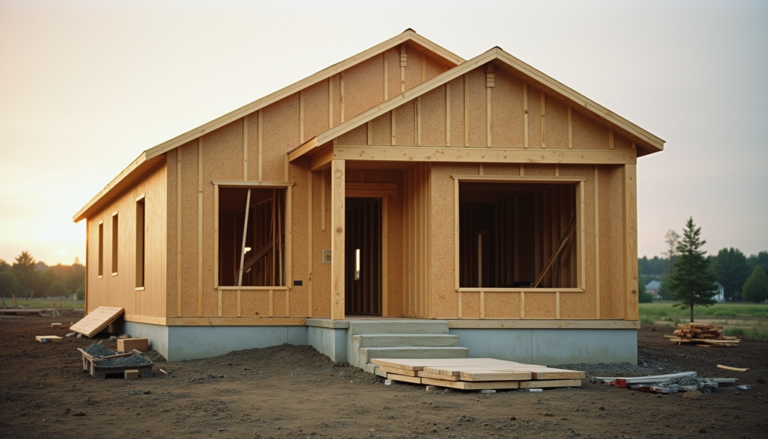
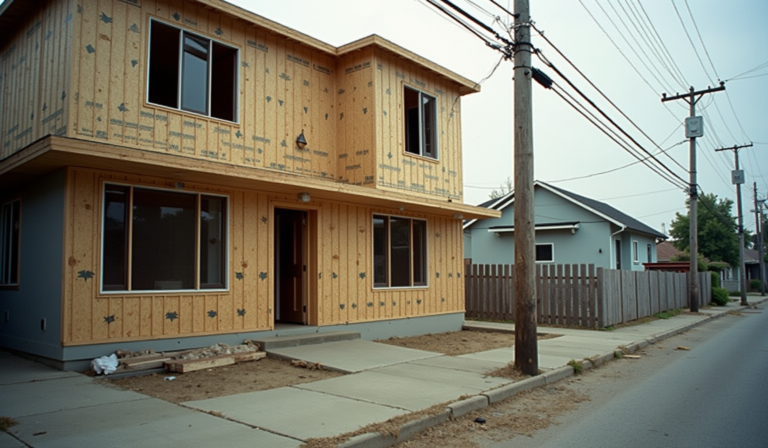
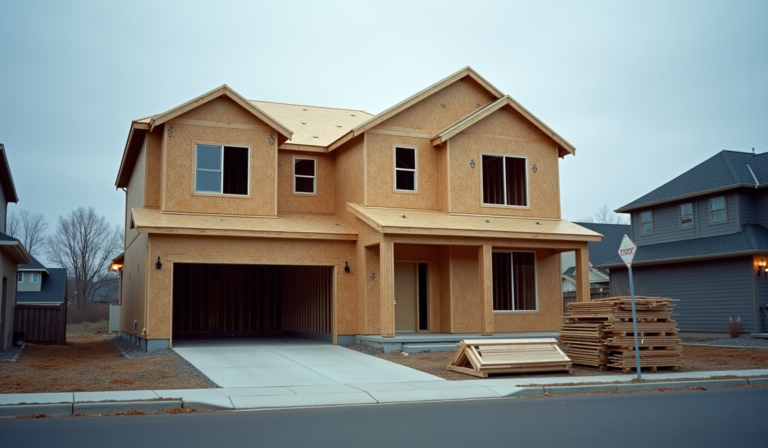
The construction loan funds from a draw schedule tied to milestones. You do not receive the full loan amount at close. You draw it in tranches as work is completed, an inspector confirms progress, and the lender approves each draw request. Most programs use five to seven draws. You pay interest only on what has been drawn, which matters because a fully committed loan facility on a partially built property does not mean you owe full interest from day one.
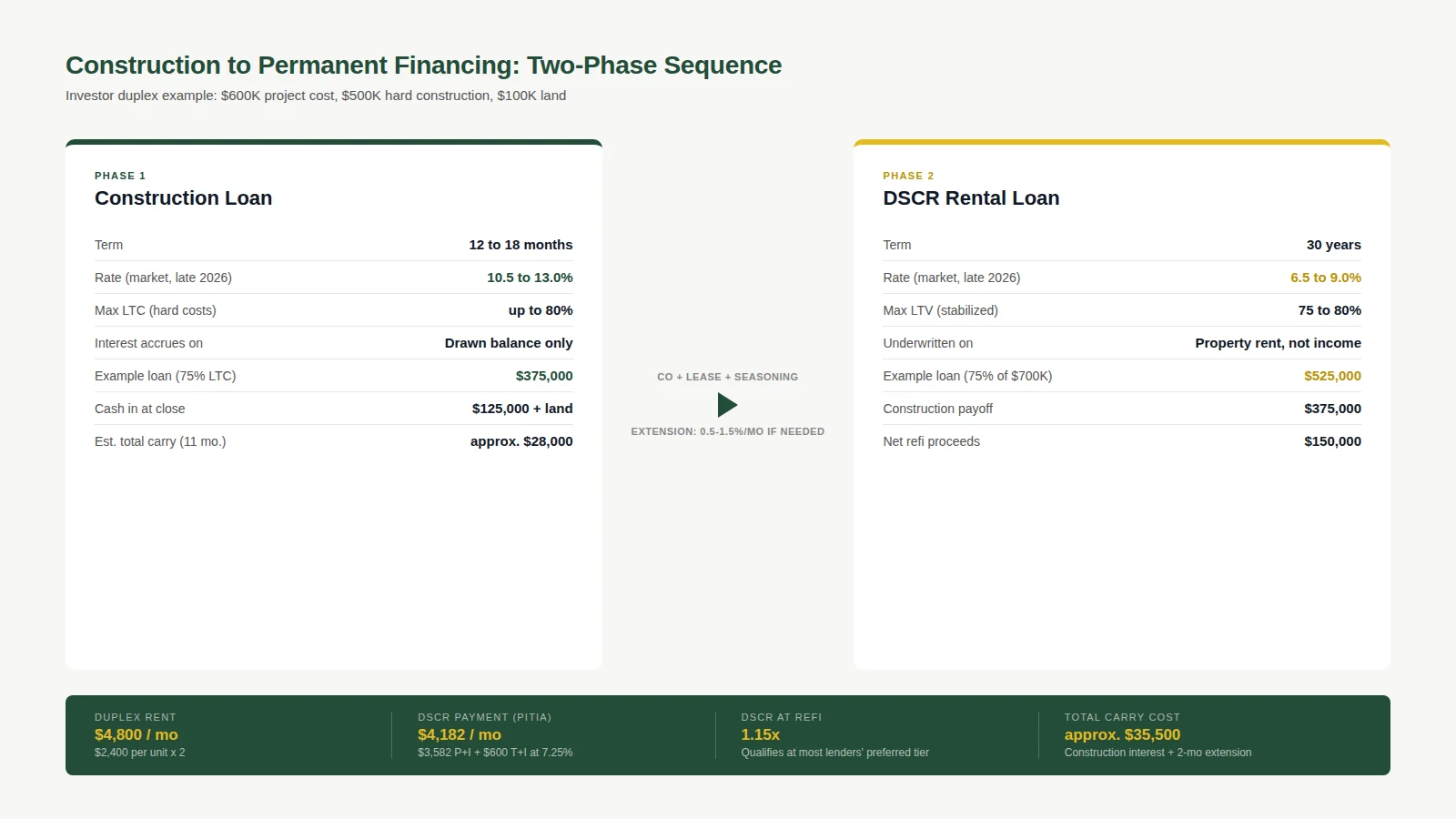
Typical terms for a ground-up investment property in late 2026, based on programs in the market: loan-to-cost in the 70 to 80 percent range on hard construction costs, excluding land unless purchased within the prior six months. Rates run from approximately 10.5 to 13 percent depending on your experience, the exit plan, and whether the asset is presold or speculative. Terms are 12 to 18 months, with extensions available at a fee.
Four things move your rate in phase one:
- Builder track record. A sponsor who has completed three or more comparable builds prices better than a first-timer. A first ground-up project typically adds 100 to 150 basis points.
- LTC. Borrowing 80 percent of hard costs costs more than borrowing 70 percent. The spread is typically 50 to 100 basis points.
- Presold versus spec. A unit with a signed lease or purchase contract at break prices lower than a speculative build with an assumed exit.
- Property type. Single-family and small multifamily up to four units price better than larger commercial multifamily on a business-purpose bridge stack.
See the new construction loan program page for the products we fund. For a rough carry cost estimate during the draw period, the hard money loan calculator is a serviceable proxy while a dedicated construction calculator is in development.
Phase two: the DSCR rental loan
The DSCR loan that replaces the construction loan is underwritten on the property’s cash flow, not your personal income or tax returns. The lender calculates the debt service coverage ratio: monthly gross rent divided by the monthly principal, interest, taxes, and insurance (PITIA). Most programs require a minimum DSCR of 1.0. Better pricing starts at 1.20 and above.
Rate ranges for DSCR rental loans in late 2026 run from approximately 6.5 to 9.0 percent depending on DSCR, LTV, property type, and whether you are closing in an entity or personally. The LTV cap on a stabilized rental is typically 75 to 80 percent of the appraised value. On a ground-up build you are holding as a rental, the appraisal reflects the stabilized income value, not cost-to-build. If comparable rentals in the market support a value above your all-in cost, the DSCR loan can return some or all of your equity at close.
Use the DSCR calculator to test your expected rent against the projected payment before you commit to the build budget. The number that matters is not whether the project pencils at today’s rate: it is whether it still qualifies if rates move 100 basis points between break and CO.
See the DSCR rental loan program page for current parameters.
Want terms on a specific deal?Answer seven questions and get a decision in 72 hours.
Get FundingThe stabilization gap: what happens between CO and the DSCR refi
This is the section most content on this topic avoids, and it is where deals run into real trouble.
The certificate of occupancy is not the refi trigger. The DSCR loan is triggered by stabilization: the property is occupied, rent is flowing, and the appraisal reflects a leased value rather than a subject-to-completion value. Most DSCR lenders want at least one executed lease and 30 days of rental history at minimum. Some require three to six months of seasoning before they will use market rent in the DSCR calculation.
That gap matters because your construction loan clock keeps running during the stabilization period. If your construction loan matures at 12 months and the DSCR lender requires four months of seasoning, you need either an extension on the construction side (typical cost: 0.5 to 1.5 percent of the outstanding balance per month) or a lender who can bridge that window with a short-term rental bridge product.
An investor who finished construction at month 10, had a CO and a tenant at month 11, and closed the DSCR refi at month 14 with three months of rental history needed a two-month extension. At 1 percent per month on a $450,000 balance, that is $9,000 in additional carry. It is real money that should be in the pro forma from day one, not discovered at month 13 when the maturity notice arrives.
A worked example
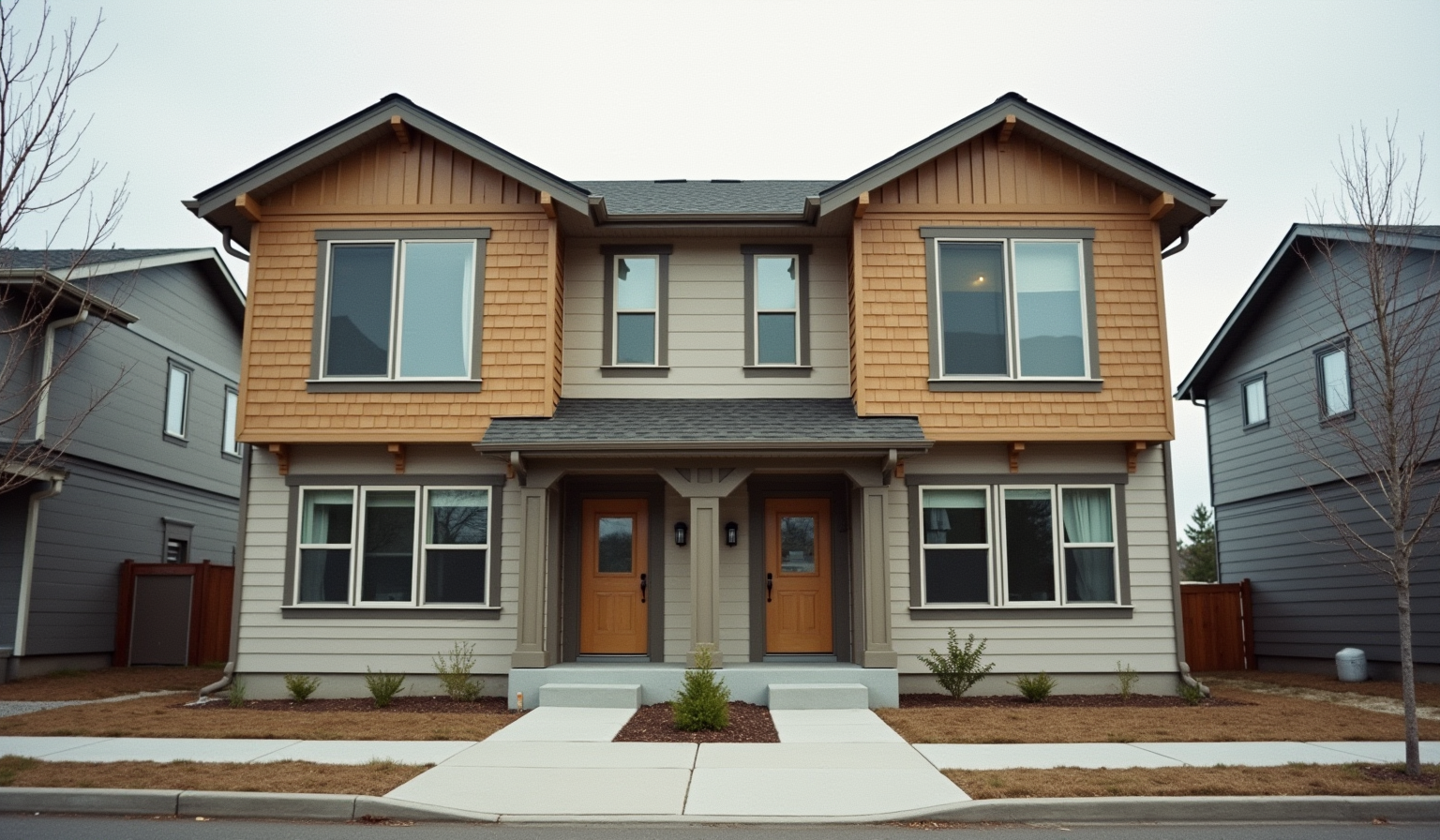
A duplex in a secondary market. Land: $100,000. Construction budget: $500,000. Total project cost: $600,000.
Construction loan at 75 percent LTC on hard costs: $375,000. Cash in at close: $125,000 plus land equity. Draw schedule over 11 months.
Interest calculation at 11.5 percent:
- Months 1 to 6: average drawn balance of $206,000 at 11.5 percent, $1,974 per month, $11,844 total.
- Months 7 to 11: average drawn balance of $337,500 at 11.5 percent, $3,234 per month, $16,172 total.
- Construction carry: approximately $28,000.
CO issued at month 12. First tenants placed at $2,400 per unit, $4,800 per month total. Two-month extension on the construction loan at 1 percent per month: $3,750 per month times two = $7,500 additional carry.
DSCR refi closes at month 14 with three months of rental history:
- Stabilized appraisal: $700,000
- DSCR loan at 75 percent LTV: $525,000
- Construction loan payoff: $375,000
- Net proceeds at refi: $150,000, roughly recovering the original cash-in position before closing costs
- Monthly payment (30yr, 7.25%, $525K): $3,582
- Monthly taxes and insurance estimate: $600
- PITIA: $4,182
- DSCR: $4,800 divided by $4,182 = 1.15
A 1.15 DSCR qualifies at most lenders’ preferred tier and prices in the middle of the rate range. Total carry through the refi: approximately $35,500. That number belongs in the pro forma from the day you sign the land purchase contract.
Rates: the number you cannot lock from day one
The construction rate and the DSCR rate are two separate decisions on two separate underwriting events. You do not lock a DSCR rate when you close the construction loan. The rate you get at the DSCR refi depends on market conditions at the time the loan closes, the DSCR the property actually produces, and the LTV the appraisal supports.
A common mistake: building a project that pencils at today’s DSCR rates and assuming those rates hold for the 12 to 18 months it takes to build and stabilize. Rates moved 200 basis points in both directions during 2023 and 2024. Run the exit analysis at the current rate and at 100 to 150 basis points higher. If the deal only works at today’s rate, it does not pencil.
For context on how DSCR rate tiers work at the refi stage, the DSCR loan rates post covers how lenders tier pricing by DSCR band and LTV, which is the same logic that applies when you are refinancing out of a construction loan into long-term hold.
When construction to permanent financing does not work
This loan structure fails most often in four situations, and honest planning means running each one before you break ground, not after.
The build runs over budget. Construction loans are sized to an approved budget. Hard cost overruns above 10 to 15 percent mean you fund the gap out of pocket or negotiate a budget amendment with the lender. Budget contingency of 10 to 15 percent of hard costs is standard underwriting, and lenders will ask how the contingency is funded at closing.
The stabilized value appraises below cost. On a spec build in a soft market, the appraised stabilized value may land at or below the all-in cost. That means no equity to refi against at 75 percent LTV, and you may need to bring cash to close the DSCR loan or wait for market conditions to improve.
The rents do not cover the DSCR payment. If the market softens between break and occupancy, and rents come in 15 percent below projection, a projected 1.15 DSCR can become 0.98 in practice. Most DSCR lenders require 1.0 minimum; some require 1.1 or higher. Below that floor, the refi does not close on the expected timeline, and you are either in extension or shopping for a bridge product to buy more time.
You are building a home to live in. Business-purpose construction to permanent financing cannot fund the home you plan to occupy as your primary residence. Consumer construction programs from banks and credit unions serve that need and are subject to consumer protection statutes that business-purpose loans are not. Call us at 917-842-9982 and we will tell you plainly within the first few minutes whether a deal qualifies.
Common questions
Is construction to permanent financing available for duplexes and small multifamily?
Yes. Two- to four-unit residential investment properties qualify under most business-purpose construction programs. The underwriting looks at the project budget, the builder’s track record, and the stabilized rent projection for the exit analysis. Five or more units move into the commercial multifamily stack, which has different documentation requirements and typically requires a more detailed operating pro forma.
Can I lock the DSCR rate at the time I close the construction loan?
In most cases, no. The construction loan and the DSCR refi are separate transactions. You cannot rate-lock a loan that will close 12 to 18 months from now under normal market conditions. Some programs offer a forward commitment or a two-close structure with a rate lock for a fee, but these are less common in the business-purpose space and the cost of the lock needs to be weighed against the rate risk. Run the numbers at current rates and at 100 to 150 basis points higher when building your pro forma.
What is the minimum rental history a DSCR lender needs before they will refi out of a construction loan?
It varies by lender and program. Some will refi on a signed lease with no rental history at all, using the lease rent in the DSCR calculation. Others require 30 to 90 days of actual rent receipt. The more conservative programs require six months of seasoning. Ask specifically what documentation the DSCR lender needs before you close the construction loan, because that answer sets your timeline and determines how much extension carry you need to budget.
What happens if the stabilized appraisal comes in below the construction cost?
The DSCR loan is sized off the appraised value, not your cost. If the appraisal at 75 percent LTV does not fully pay off the construction loan, you need to bring the difference to the refi closing table. This is the most common reason investors get stuck between a construction loan maturity and a DSCR close. Run the appraisal sensitivity with a 10 to 15 percent downside case before you break ground.
Does title seasoning matter if I am the original builder and have never sold the property?
Seasoning in this context refers to how long the rental has been producing income, not how long you have owned the property. For a new build, you are the first owner by definition, so title seasoning is not the issue. The DSCR lender wants to see that the rent is real and supported by an executed lease and, ideally, some payment history. The seasoning clock starts from the date of the first lease, not from when you broke ground.
To model the stabilized cash flow before you finalize the build budget, use the DSCR calculator with your projected rent and the payment at the LTV the appraisal is likely to support. For the mechanics of the construction draw process itself, the ground-up construction loan post covers draw schedules, inspection requirements, and how interest accrues on a phased draw facility. Call 917-842-9982 to walk through a specific ground-up project.
Ready to fund your next deal?
Approval within 72 hours. Close in 5 to 10 business days.
Get Funding Now