DSCR Loan Requirements: What Real Estate Investors Need to Qualify in 2026
Rent that covers the payment, 620+ credit, and 20-25% down: the seven DSCR loan requirements explained, with the exact numbers lenders look for and how to run your own deal in 60 seconds.

To qualify for a DSCR loan, most lenders want three things: a property whose rent covers its monthly debt payment (a DSCR of 1.0 or higher), a credit score of roughly 620 or better, and a down payment of 20 to 25%. No tax returns, no W-2s, no personal income verification, the property’s cash flow does the qualifying, not your paycheck.
That’s the short answer. The rest of this guide walks through each requirement in detail, shows you how to run your own numbers before you apply, and covers the edge cases, low ratios, lower credit, first-time investors, where deals still get funded.

What is DSCR, and why do lenders care?
DSCR stands for debt service coverage ratio. It’s a single number that tells a lender whether a rental property pays for itself:
DSCR = Monthly Rent ÷ Monthly Debt Payment (principal, interest, taxes, insurance, and any HOA dues)
A property renting for $2,400 a month with a $2,000 all-in payment has a DSCR of 1.20, it produces 20% more income than it costs to hold. A DSCR of exactly 1.00 means the property breaks even. Below 1.00, the property loses money each month, and the lender knows you’d be feeding it out of pocket.
Because the ratio answers the only question that matters, does this asset cover its own debt?, DSCR lenders can skip the paperwork that slows conventional loans down: no tax returns, no employment verification, no debt-to-income calculation. That’s why DSCR loans have become the default financing tool for self-employed investors and anyone scaling past the conventional-loan limit.

The 7 DSCR loan requirements, in plain English
| Requirement | Typical minimum | Notes |
|---|---|---|
| DSCR ratio | 1.00 to 1.25 | Some programs fund below 1.00 with stronger reserves or lower leverage |
| Credit score | 620 to 680 | Higher scores unlock better pricing and higher leverage |
| Down payment | 20 to 25% | i.e., max 75 to 80% loan-to-value |
| Cash reserves | 3 to 6 months of payments | Proof you can weather a vacancy |
| Property type | 1 to 4 unit residential, condos, some multifamily | Must be an investment property, never a primary residence |
| Loan purpose | Purchase, refinance, or cash-out | Business or investment purpose only |
| Borrowing entity | Personal name or LLC | Most investors close in an LLC, DSCR lenders are built for it |
1. The ratio itself: what number do you actually need?
Most DSCR programs draw the line somewhere between 1.00 and 1.25. At 1.25 and above you’re in the strongest position, best rates, highest leverage. Between 1.00 and 1.25 you’ll still find plenty of options, sometimes with a modest rate adjustment. Below 1.00, common in high-appreciation markets where rents lag prices, some lenders will still fund the deal if you bring a larger down payment or show deeper reserves.
Market rent is usually established by the appraiser’s rent schedule (Form 1007), not just your lease, so a below-market lease doesn’t automatically sink the ratio.
2. Credit score: lower than you’d think
DSCR loans are asset-based, so credit matters less than it does on a conventional mortgage, but it still prices the loan. Many programs open at 620; the meaningful pricing tiers tend to sit at 680, 720, and 760. A borrower at 740 with a 1.30 ratio is shopping from the top shelf. A borrower at 640 with a 1.05 ratio still gets funded, just at terms that reflect the risk.
3. Down payment and leverage
Expect to bring 20 to 25% down on a purchase (75 to 80% LTV). Cash-out refinances typically cap a bit lower, around 70 to 75%. The stronger your ratio and credit, the closer you’ll get to the top of those ranges.
4. Reserves: the requirement investors forget
Most lenders want to see 3 to 6 months of the full monthly payment in liquid reserves after closing. It doesn’t have to sit idle forever, it just has to exist on the day you close. Investors who plan their rehab budget down to the last dollar and forget reserves are the most common avoidable decline we see.
5. Property type and condition
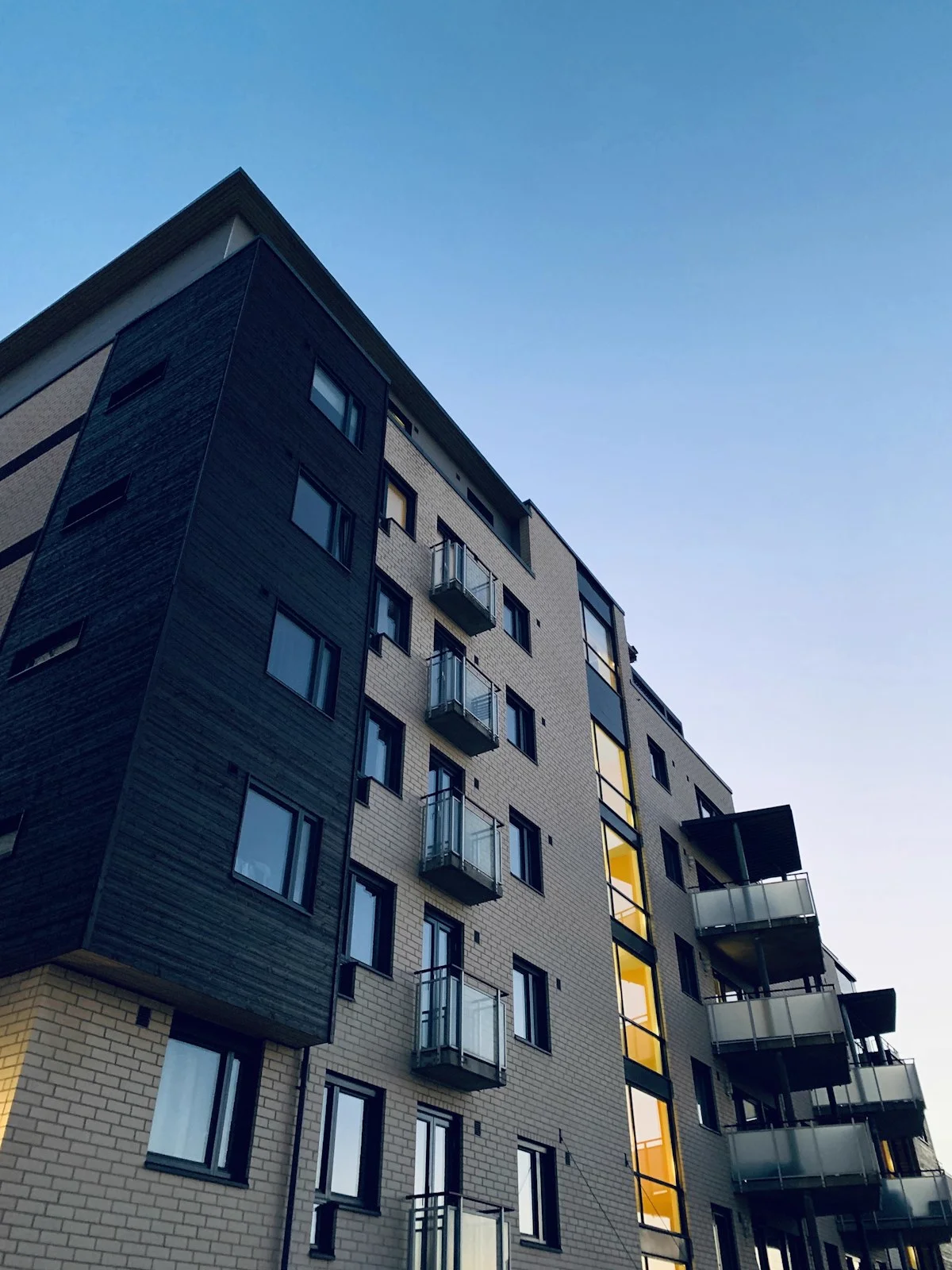
The property has to be rent ready on day one, because the loan is underwritten on income it can produce now, not after work. Single family, two to four unit, and most condos and townhomes are standard. Rural properties, unique construction, and anything with active health or safety issues get harder or get declined. If the house needs $30,000 of work before a tenant moves in, that is a fix and flip or a BRRRR deal first and a DSCR refinance second.
6. Vesting and the personal guarantee
Most DSCR lenders prefer, and many require, that the property is held in an LLC. That is a feature of business purpose lending, not a hurdle: it is the same reason the loan does not need your tax returns. Expect to sign a personal guarantee anyway. The entity holds the asset, the guarantee gives the lender recourse, and the two together are what keeps the loan out of consumer mortgage territory.
7. The appraisal and the market rent schedule
Two documents set your file, not one. The appraisal sets value, and a market rent schedule, form 1007, sets the rent the lender will actually use. If your lease says $2,600 and the 1007 says $2,300, most lenders underwrite the lower figure. That single line can move a 1.15 DSCR to 1.02 and change your rate tier, so it is worth knowing what comparable units in the building actually rent for before you order the appraisal.
Want terms on a specific deal?Answer seven questions and get a decision in 72 hours.
Get FundingWhat a stronger ratio is actually worth
DSCR is not pass or fail. It is a pricing tier, and the difference between clearing a threshold and sitting just under it is real money over a hold period.
| DSCR | What it means | Typical effect on the deal |
|---|---|---|
| Below 1.00 | Rent does not cover the payment | Available on some programs with compensating strengths, at lower leverage and a higher rate |
| 1.00 to 1.14 | Break even to thin | Qualifies widely, prices at the weaker tiers, reserves scrutinised harder |
| 1.15 to 1.24 | The common approval band | Standard leverage and standard pricing |
| 1.25 and above | Comfortable coverage | Best tier pricing and the most room on leverage |
Two levers move you between tiers without finding a different property: put more down, which lowers the payment, or buy the rate down with points, which does the same thing. Run both against how long you actually intend to hold before you pick one. Our DSCR calculator takes about thirty seconds and full terms are on the DSCR rental loan page.
If you are building rather than buying, the same ratio decides your exit: see how a ground up construction loan works, where the DSCR on the finished property is what the whole project has to clear.
What DSCR lenders do NOT ask for
- No tax returns, write-offs that shrink your taxable income don’t hurt you here.
- No W-2s or pay stubs, employment is irrelevant to the ratio.
- No debt-to-income calculation, your car payment doesn’t compete with your rental.
- No limit from your other mortgages, conventional loans cap out at 10 financed properties; DSCR programs don’t care how many doors you already own.
Want to know if your deal qualifies? Our 2-minute pre-qualification asks six questions, no credit pull, no documents. Check your eligibility here.
Run your own numbers before you apply
Here’s the 60-second version of what an underwriter does:
- Get the realistic monthly market rent (comps or an appraiser’s rent schedule).
- Estimate the full monthly payment: principal + interest + property taxes + insurance + HOA.
- Divide rent by payment.
Example: a $310,000 single-family rental with 25% down leaves a $232,500 loan. At today’s investor rates, the all-in payment lands around $1,975/month. Market rent is $2,300. DSCR = 2,300 ÷ 1,975 = 1.16, comfortably fundable.

Common DSCR questions
Can I get a DSCR loan for my first investment property?
Usually, yes. Some programs prefer 6 to 12 months of prior landlord or ownership experience, but plenty of first-time investors close DSCR loans, expect slightly more conservative leverage.
Can I live in the property?
No. DSCR loans are business-purpose loans for investment property only. Occupying the home puts you in consumer-mortgage territory, which is a different product entirely.
What if my DSCR is below 1.0?
You still have options: bring more money down, buy the rate down, or use a program built for sub-1.0 ratios with compensating strengths. Short-term-rental income can also be counted by some programs, which often lifts the ratio.
Do DSCR loans have prepayment penalties?
Often, yes, a 3 to 5 year step-down (e.g., 5-4-3-2-1) is typical, and it’s negotiable: you can usually buy it down or off. If you plan to sell or refinance quickly, raise this on day one.
How fast can a DSCR loan close?
With an appraisal in hand, 2 to 3 weeks is standard, and well-organized files can move faster. It’s consistently quicker than conventional financing because there’s no income file to build.
The bottom line
If your property’s rent covers its payment, your credit is 620+, and you can put 20 to 25% down with a few months of reserves, you’re a DSCR borrower. The product exists precisely so investors don’t have to fit their real lives into a W-2 shaped box.
Prestige Property Lending funds DSCR deals from $100K to $25M+ in all 50 states, with most loans closing in 5 to 10 business days. Start your 2-minute pre-qualification and one of our lending specialists will walk you through your options.
This article is for general information only and is not a loan offer, quote, or commitment to lend. All loans are for business or investment purposes only and subject to underwriting approval. Rates, terms, and program guidelines change without notice.
Ready to fund your next deal?
Approval within 72 hours. Close in 5 to 10 business days.
Get Funding Now