How Much Cash You Actually Need to Flip a House
Most first time flippers budget the down payment and closing costs. Then the first draw request arrives and the gap shows up. Here is the number that actually matters, worked through a real project.
Ask a new investor how much cash they need to flip a house and you will almost always get the down payment. Fifteen percent of the purchase price, plus something for closing costs. On a $180,000 property that is around $27,000, maybe $32,000 with closing.
That number is wrong, and the way it is wrong is what ends most first flips. Not a bad market. Not a bad contractor. A cash flow gap that was predictable from the day the loan was structured.
The renovation money is real, and you do not have it
Here is the part that gets skipped. When a lender says they will fund up to one hundred percent of your renovation budget, that money is not handed to you at closing. It sits in a holdback and comes out in draws, and a draw is a reimbursement. You pay for the work first. Then you request the draw. Then an inspector confirms the work is done. Then the money is released.
That cycle takes a few business days on a good file. Sometimes longer if the inspection gets scheduled slowly or your documentation is incomplete. Throughout that window, the money is out of your pocket and not yet back in it.
So the real question is not what your total renovation budget is. It is this: what is the largest single amount you will have to carry before anyone pays you back?
A worked example
Take a straightforward project. Purchase at $180,000, renovation budget of $55,000, after repair value of $330,000. The lender funds eighty five percent of purchase and one hundred percent of rehab. On paper it looks comfortable.
Now stage the renovation the way it actually happens.
| Stage | Scope | Cost you carry | Reimbursed after |
|---|---|---|---|
| 1 | Demolition, structural, rough plumbing and electrical | $22,000 | Inspection |
| 2 | Drywall, windows, roof repair | $16,000 | Inspection |
| 3 | Kitchen, bathrooms, flooring | $12,000 | Inspection |
| 4 | Paint, fixtures, landscaping, punch list | $5,000 | Inspection |
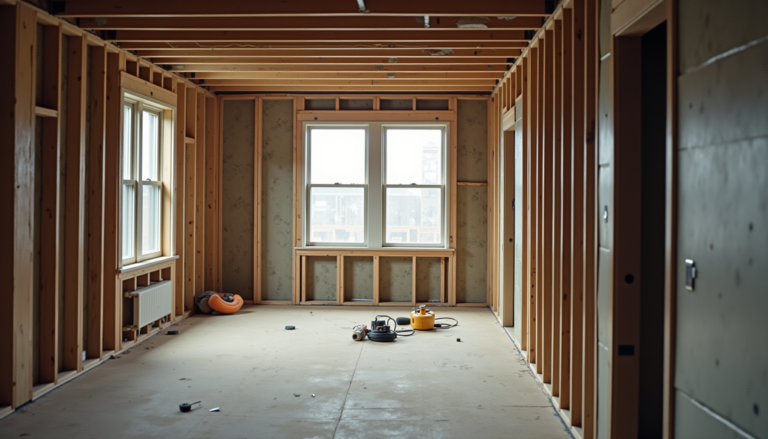
Your first stage is $22,000. You pay that before you see a dollar of the holdback. Add the down payment of $27,000 and roughly $4,500 in purchase closing costs, and you are at $53,500 before the first draw arrives.
And that assumes stage one comes in on budget, which is the stage where people open walls and find things.
Want terms on a specific deal?Answer seven questions and get a decision in 72 hours.
Get FundingThe costs that run in the background
While all of that is happening, the property is costing you money every month whether anyone is working on it or not.
- Interest on the loan, which on an interest only facility is charged on the drawn balance
- Property taxes and insurance, which do not pause for renovations
- Utilities, because you need power and water on site to do the work
- Lawn, snow or basic upkeep, especially if the neighborhood has an association
Call it $650 a month on a project like this. Over a six month hold that is $3,900. Over a nine month hold, because the kitchen cabinets were backordered, it is $5,850. That money comes from the same pocket as everything else.
So what is the real number
Add it up honestly for the example above.
| Requirement | Amount |
|---|---|
| Down payment at 15 percent | $27,000 |
| Purchase closing costs | $4,500 |
| Origination points at 2 percent | $4,500 |
| Largest single draw stage carried | $22,000 |
| Holding costs across the project | $3,900 |
| Contingency at 10 percent of renovation | $5,500 |
| Realistic cash requirement | $67,400 |
Roughly $67,000 against the $32,000 most people budget. The deal did not change. The financing did not change. The only thing that changed is that the timing of the money was accounted for.
You can run these numbers against your own deal with the fix and flip profit calculator, which models financing, holding and selling costs rather than just the spread between purchase and resale.
What experienced flippers do differently
The operators who do this repeatedly are not smarter about renovation. They are structured differently around cash.
- They stage the scope so the first draw is small. Front loading a $22,000 demolition phase is a choice, not a requirement. Splitting it into two smaller verifiable stages cuts the carry in half.
- They agree payment terms with contractors that align to the draw cycle rather than paying everything on completion of each phase.
- They keep a reserve that is untouchable, sized to one full stage plus two months of holding costs.
- They ask the lender how long draws actually take, in business days, on files like theirs, and they believe the honest answer rather than the marketing one.
- They treat the contingency as already spent. It is not profit waiting to be collected.
The question to ask before you sign
When you are comparing lenders, rate and leverage get all the attention. They matter. But on a six month project the difference between two lenders on rate is often a few thousand dollars, while the difference between a four day draw turnaround and a fourteen day one can stall your entire schedule and add months of holding cost.
Ask these four things, and ask them before you are under contract.
- How many business days from draw request to funds released, on average, in the last quarter?
- Who performs the inspection, and how quickly do they schedule?
- Can the draw schedule be structured around my phases rather than a fixed template?
- What documentation do you need with each request, exactly?
A lender who can answer those precisely has done this a lot. A lender who cannot is going to teach you about draw cycles on your own project.
If the cash is not there yet
This is not an argument against flipping. It is an argument against flipping with a budget that only accounts for half the requirement. If the realistic number is out of reach today, there are structures that need less working capital.
A DSCR rental loan on a property that needs little or no work avoids the draw cycle entirely, because there is no renovation to fund. A lighter cosmetic renovation with a $15,000 scope has a much smaller carry than a full gut. And a BRRRR structure can work if you plan the refinance before the purchase, though it introduces a seasoning period that has its own timing implications.
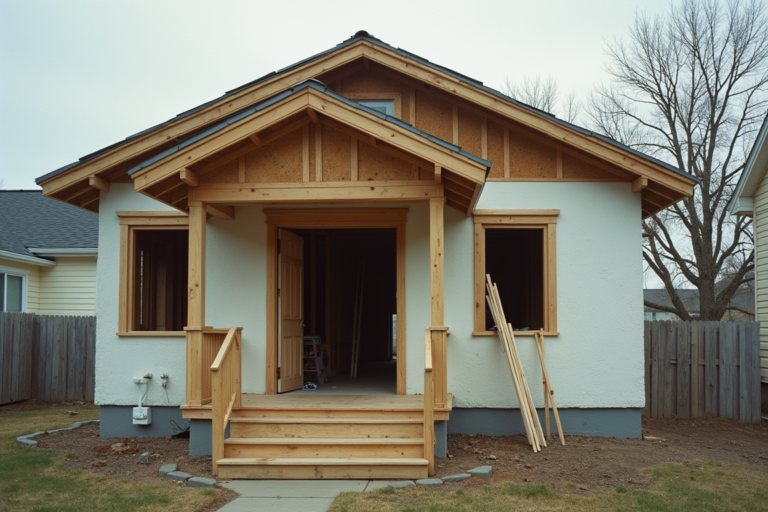
The worst version of this is committing to a full renovation on a budget sized for a cosmetic one, then discovering the gap at stage two with a half demolished house and no way to finish it.
The short version
Your cash requirement on a flip is the down payment, plus closing costs, plus points, plus the largest renovation stage you will carry before reimbursement, plus holding costs for the realistic timeline, plus a contingency you assume you will spend. On a typical project that lands at roughly double what the down payment alone suggests.
Budget for that number and the draw cycle is an administrative process. Budget for the down payment alone and it is the thing that ends the project.
If you want a second read on a specific deal, tell us about the project and we will walk the numbers with you before you are committed to them. See current terms on the fix and flip loan page.
Frequently asked questions
How much cash do you need to flip a house?
More than the down payment. Budget for the down payment, purchase closing costs, origination points, the largest single renovation stage you must carry before a draw reimburses you, holding costs for the realistic timeline, and a contingency of around ten percent of the renovation. On a typical project that is roughly double the down payment alone.
Do fix and flip lenders give you the renovation money at closing?
No. The renovation budget sits in a holdback and is released in draws as work is completed and inspected. You fund each stage first and are reimbursed afterwards, which is why working capital beyond the down payment is essential.
How long does a renovation draw take?
Commonly a few business days from request to funds released, assuming complete documentation and a promptly scheduled inspection. Ask any prospective lender for their actual average in business days, because a slow draw cycle stalls your schedule and adds holding costs.
Can you flip a house with no money down?
Financing that covers the purchase and the full renovation budget still leaves you carrying each renovation stage before reimbursement, plus closing costs, points and holding costs. A genuine no cash flip is very rare and usually involves a partner supplying the working capital.
What is a realistic contingency for a flip renovation?
Around ten percent of the renovation budget is a common minimum, and older properties or full gut renovations often warrant more. Treat the contingency as already spent when you evaluate whether the deal works.
Ready to fund your next deal?
Approval within 72 hours. Close in 5 to 10 business days.
Get Funding Now